FastRide.
Remembering a ride reservation
The park’s booking API returns an access code and a time to come back. A visitor who refreshes the page still needs both. I built the Next.js client that takes a rider from choosing an attraction to retrieving that ticket.
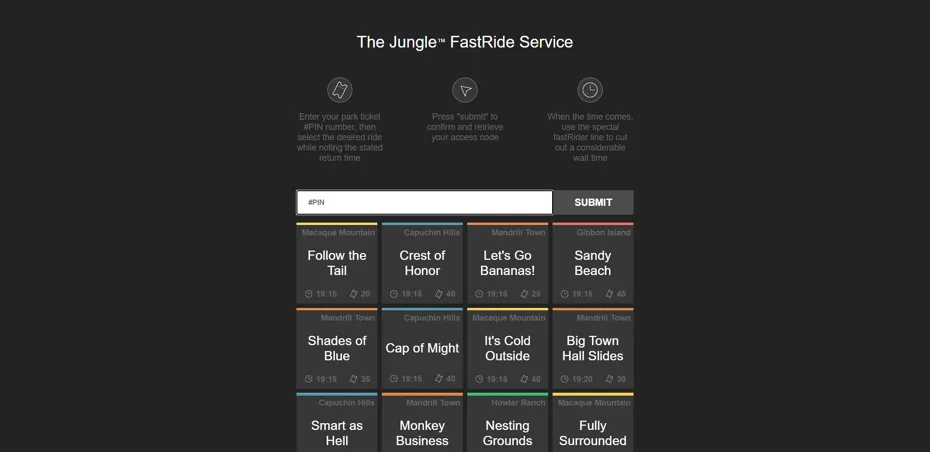
My responsibility
I implemented the ride list, PIN checks, booking request and ticket display. The booking service was an existing API. The public repository contains my client implementation.
Where the ticket lives
The page fetches attractions on the server. The browser validates the PIN format, sends the selected ride and stores a successful ticket locally. Keeping the ticket only in React state would have lost it on refresh. Adding accounts would have introduced an identity requirement to a single-device task.
What happens on a second request
During booking hours, a visitor who requests another ride with an unexpired ticket gets the existing code and return time. An expired ticket is cleared before the next request proceeds. The local check is specific to that browser and device.
Engineering takeaway
Persistence is a product decision. A local ticket makes recovery convenient on one device. A guarantee across devices would have to come from the booking service.